When designing a new kitchen or renovating your existing one, there are many decisions to make. Material selection is one of the most important factors that directly affect both the aesthetics and lifespan of your kitchen. In this article, you will find what you need to know about the basic materials used in kitchen furniture, quality differences, and functional solutions. Our goal is to provide you with a practical guide to help you make the right decision, without overwhelming you with information.
1. Cabinet (Body) Materials: Solid Foundations for the Kitchen Furtniture
Cabinets, which form the skeleton of your kitchen cupboards, are critically important for the durability of the furniture. Different cabinet materials vary in terms of moisture resistance, load capacity, and price:
- Melamine Coated Particle Board (Suntalam): One of the most commonly used and budget-friendly options. High-density particle boards are typically subjected to special processes to increase their resistance to moisture and finished with a melamine coating. Suitable for daily use and offers a wide range of colors/patterns.
- MDF (Medium Density Fiberboard): With a denser structure, MDF offers a smoother surface than particle board and is more suitable for painting or coating. It can be more resistant to moisture but still requires careful use. It is often preferred in mid-segment kitchens.
- Plywood: Offers high durability and superior resistance to moisture thanks to its layered structure. It is mostly preferred in upper-segment kitchens or special applications. Its price can be higher than others.
Quality Difference: The density of the material, the quality of the glue used, and the edge banding applications are the basic factors that determine the lifespan of the cabinet material. Our company uses certified and health-friendly raw materials that comply with European standards for our kitchen cabinets.
2. Door Materials: The Face of Your Kitchen
Kitchen doors are the most striking elements that determine the overall appearance of your kitchen. Many different options are available in terms of both aesthetics and durability:
- Membrane Doors: Produced by coating MDF with PVC foil. Offers a wide range of colors and patterns, is resistant to scratches and moisture. It is an economical and practical option.
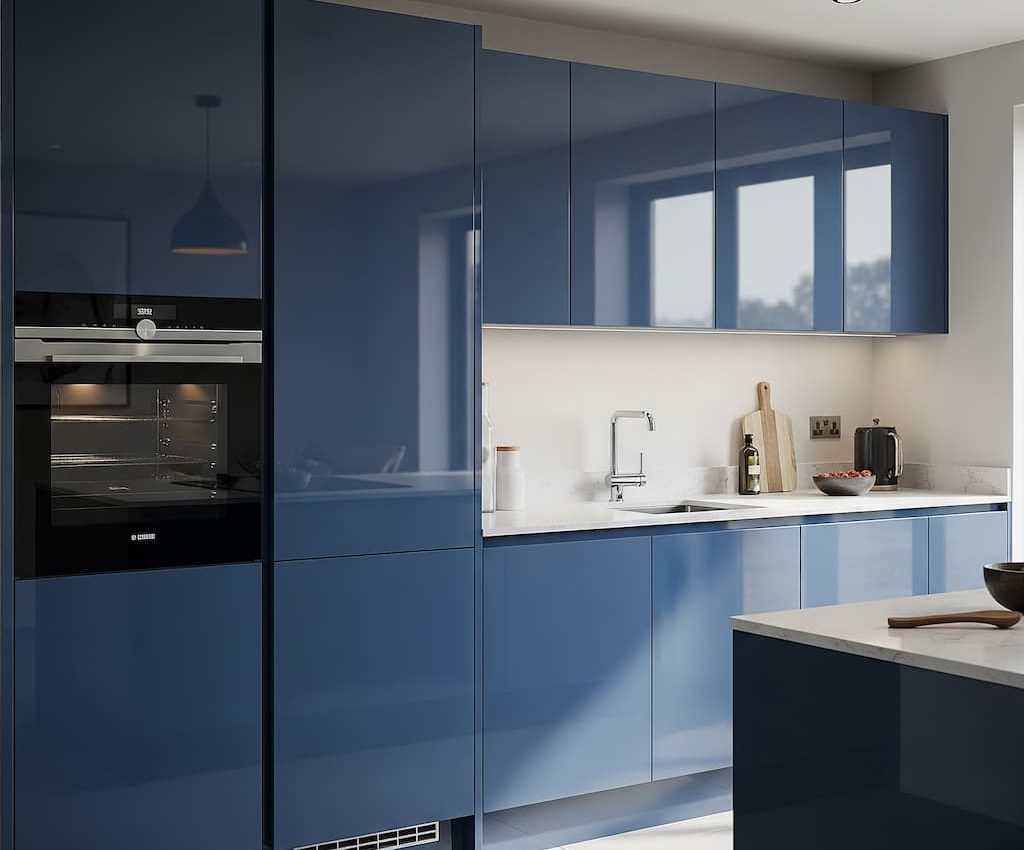
- Acrylic Doors: Obtained by pressing an acrylic plate onto MDF. It has a high-gloss and smooth surface. Offers a modern and stylish look, is resistant to scratches but care should be taken against dulling.
- Lacquer Doors: Obtained by applying paint and varnish onto MDF. Offers matte, silk matte, or glossy surface options. Provides a smooth and aesthetic appearance. It can be sensitive to scratches and requires more careful maintenance than others.
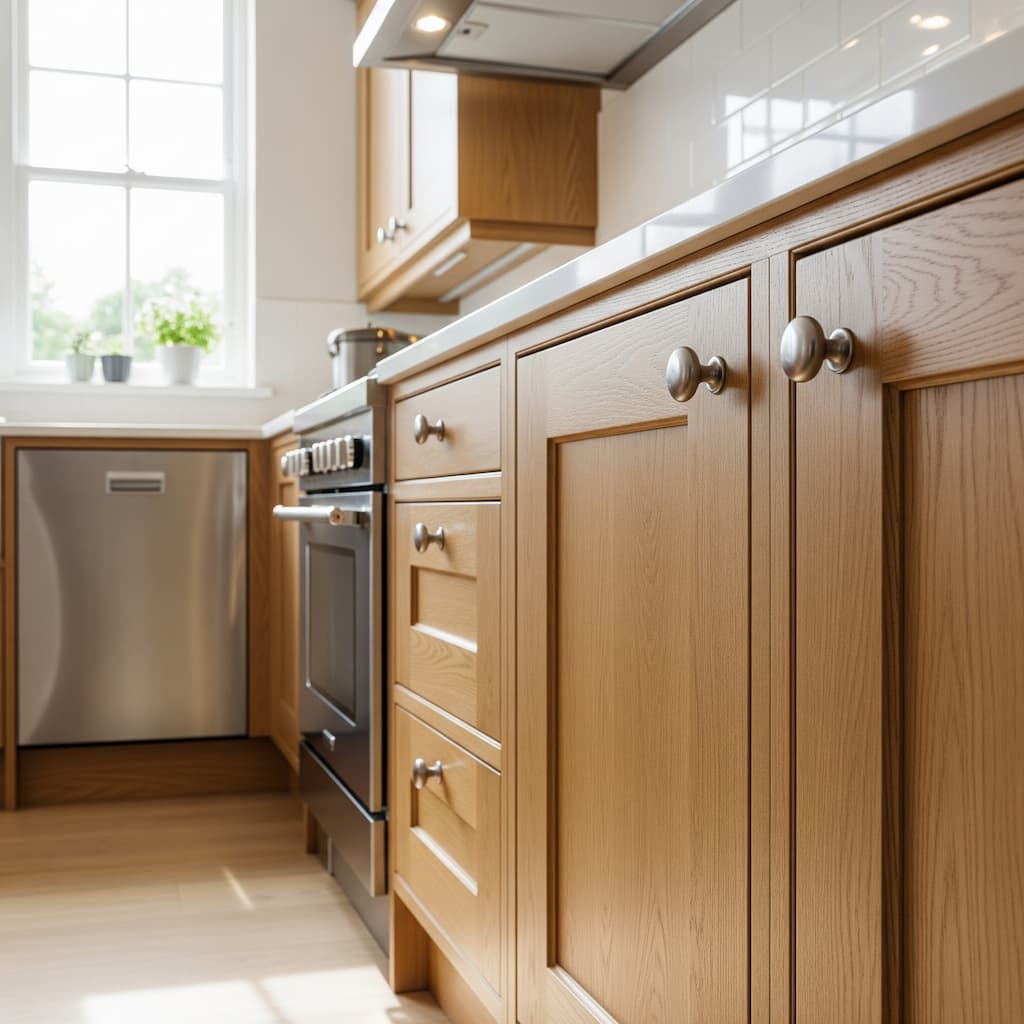
- Solid Wood Doors: Produced entirely from natural wood. Adds a warm and natural atmosphere to your kitchen. It is long-lasting and durable but can be more sensitive to changes in humidity and temperature. It may require regular maintenance, and its price is higher than other options.
- Laminate Doors: Produced by coating particle board or MDF with high-pressure laminate. It is highly resistant to scratches, impact, and moisture. Offers a wide range of colors and patterns, it is an economical and practical solution.
Quality Difference: The thickness of the door material, the quality of the surface finish, and the edge banding details directly affect the durability and aesthetics of the door.
3. Functional Accessories: Smart Storage Solutions
In modern kitchens, functionality is as important as aesthetics. Properly selected accessories optimize the space in your kitchen and provide ease of use. Our company collaborates with renowned European brands such as Blum, Hafele, and Samet for smart storage solutions. The products of these brands offer high quality and compliance with European standards.
- Drawer Rail Systems: Full-extension, soft-closing (braked) drawer rails ensure that drawers open and close silently and smoothly.
- Door Lift Systems: Used for upper cabinet doors, these systems allow doors to open upwards and stay in the desired position, creating a larger workspace in the kitchen.
- Pantry Systems: Rail-mounted pantry mechanisms in narrow and deep cabinets that make products easily accessible.
- Corner Turn Accessories: Systems such as magic corners and rotating baskets that help utilize dead space in corner cabinets efficiently.
Quality Difference: The material quality, load capacity, warranty period, and lifespan of functional accessories vary depending on the brand. High-quality accessories offer years of trouble-free use.
4. Countertop Types: Your Kitchen’s Workspace
The kitchen countertop is the most used surface in the kitchen and must be both durable and aesthetic.
- Laminate Countertops: One of the most affordable options. Offers a wide range of colors and patterns. It is resistant to scratches and impacts but can be sensitive to high temperatures and prolonged exposure to water.
- Belenco (Compact Stone Countertops): Composed of a combination of natural quartz and resin. It is hygienic, highly resistant to scratches, heat, and impact. Offers a wide range of colors and textures, it is an aesthetic and long-lasting choice.
- Granite Countertops: Offers the elegance and durability of natural stone. It is highly resistant to heat, scratches, and stains. However, due to its porous structure, it may require regular maintenance and sealing.
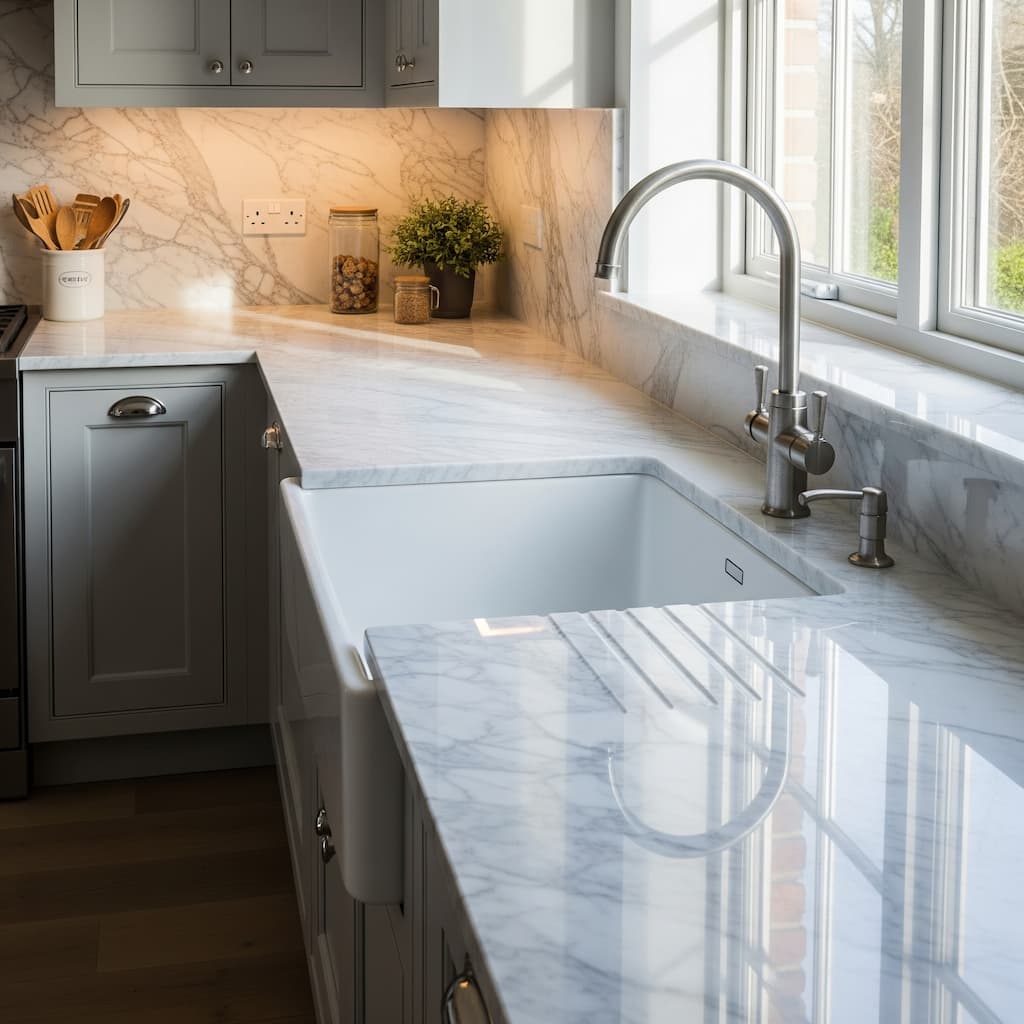
- Marble Countertops: Offers the luxurious and aesthetic appearance of natural stone. However, it is more sensitive to acid, scratches, and stains than granite. It requires regular maintenance and careful use.
- Solid Wood Countertops: Adds a warm and natural atmosphere to the kitchen. It requires regular maintenance (oiling) and is more sensitive to water and scratches than other options.
- Stainless Steel Countertops: Offers a modern and industrial look. It is hygienic, heat-resistant, and easy to clean. It can be sensitive to scratches.
Quality Difference: The thickness, density, quality of the surface finish, and installation details of the countertop material determine the durability and lifespan of the countertop.
Conclusion:
Choosing kitchen furniture is directly proportional to your personal taste, budget, and usage habits. Knowing the characteristics of materials and quality differences will guide you in creating a kitchen that you will be satisfied with in the long run. Our expert team is always by your side to offer the most suitable solutions for your needs and design the kitchen of your dreams. You can also benefit from this guide when evaluating our offer.